
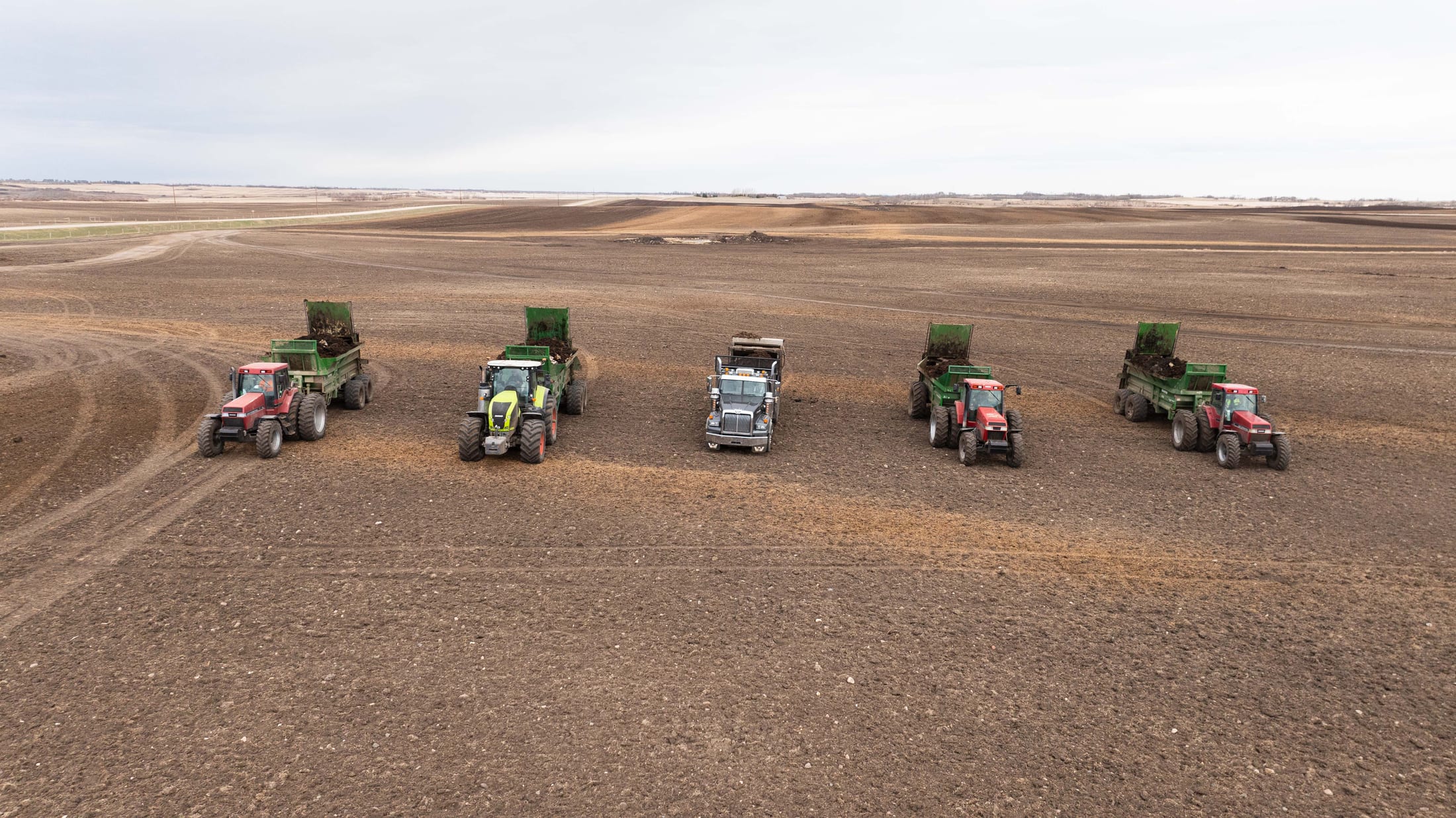
9,200+ acres of prairie, worked right.
We run the land hard enough to feed 20,000 head a year, and gentle enough to hand it on better than we found it. Grow the feed, graze it right, store it close.
We grow what the herd eats.
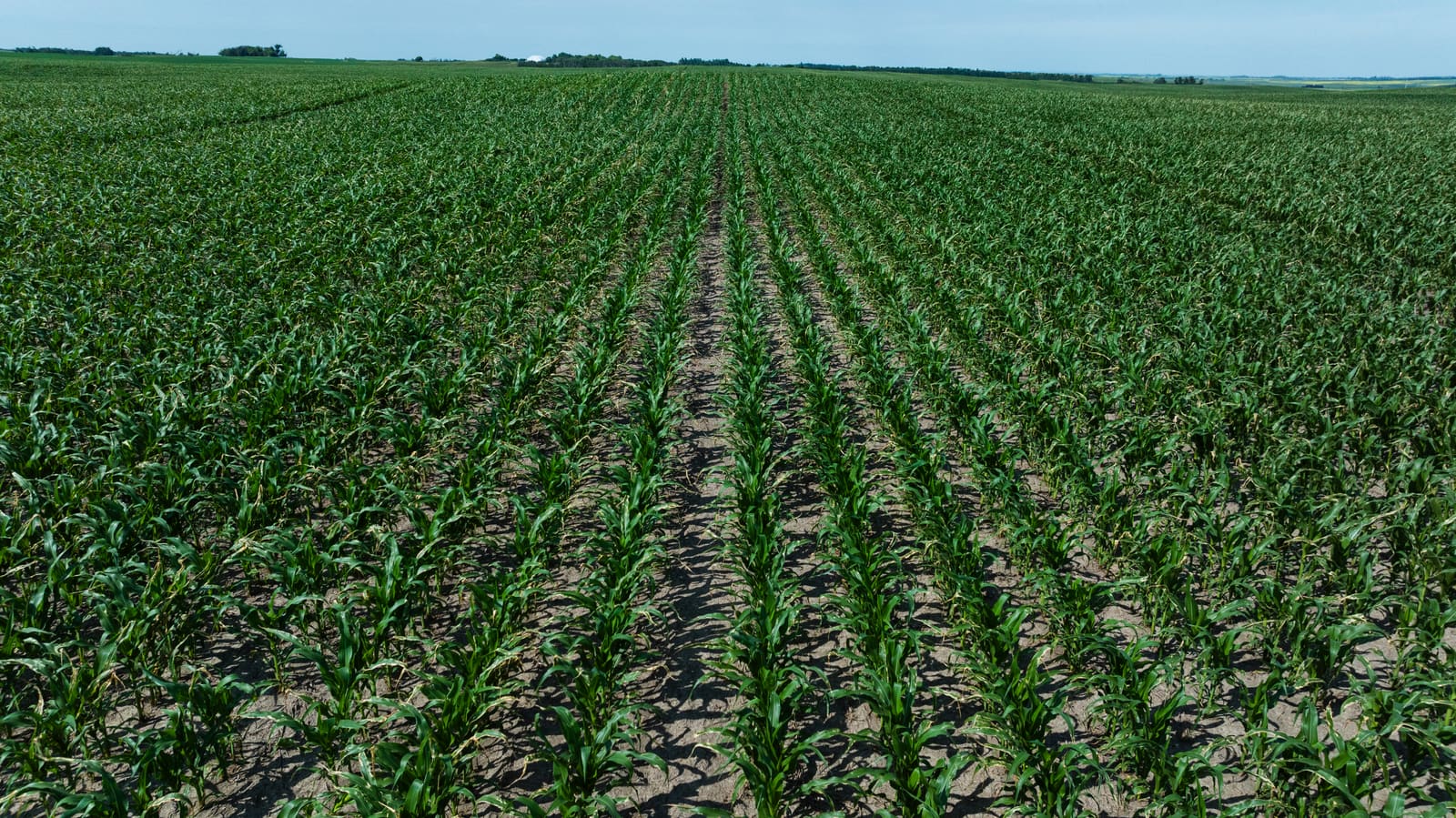
We farm roughly 2,000 acres for our own feed, oats and corn in rotation, all put up as silage. Growing it ourselves means we control exactly what goes into every animal.
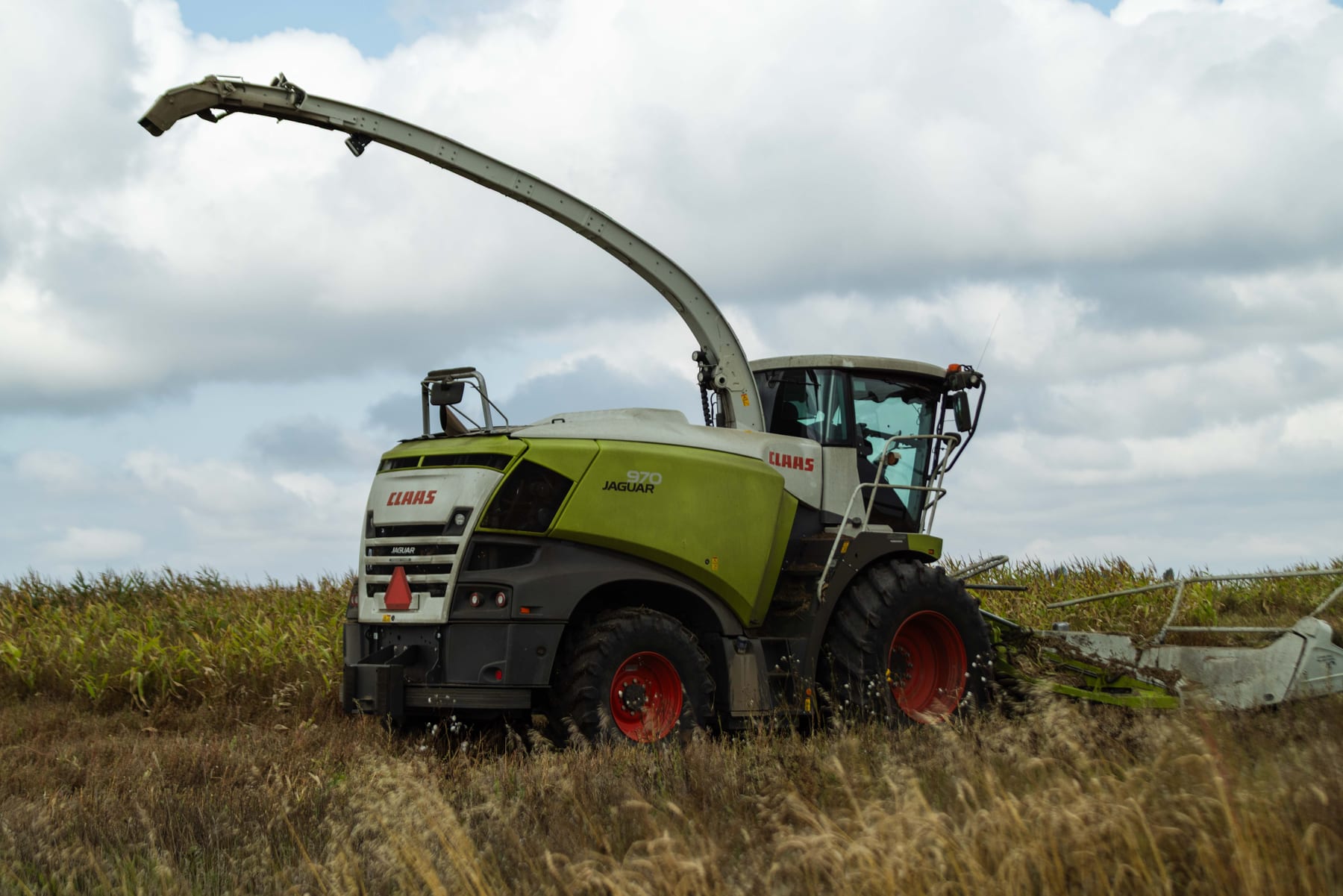
About 2,000 acres
Farmed for feed every year, so the herd is fed on what this land produces.
Oats first
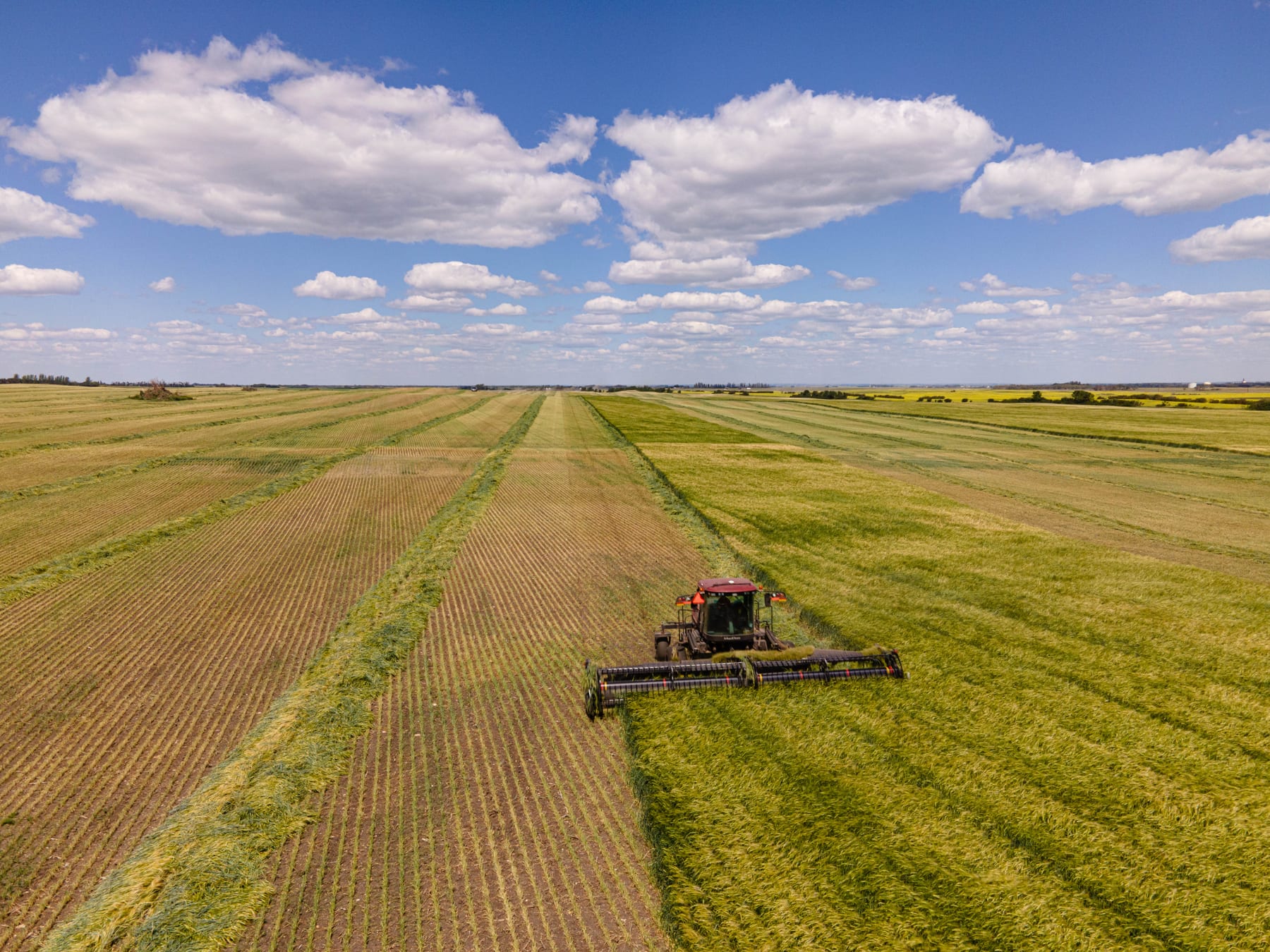
Oats take the prairie heat better than barley and hold their silage tonnage even in a dry year.
Corn silage
Corn silage rounds out the ration and is packed and stored on site.
We control it
Growing our own feed means we know exactly what goes into every animal.
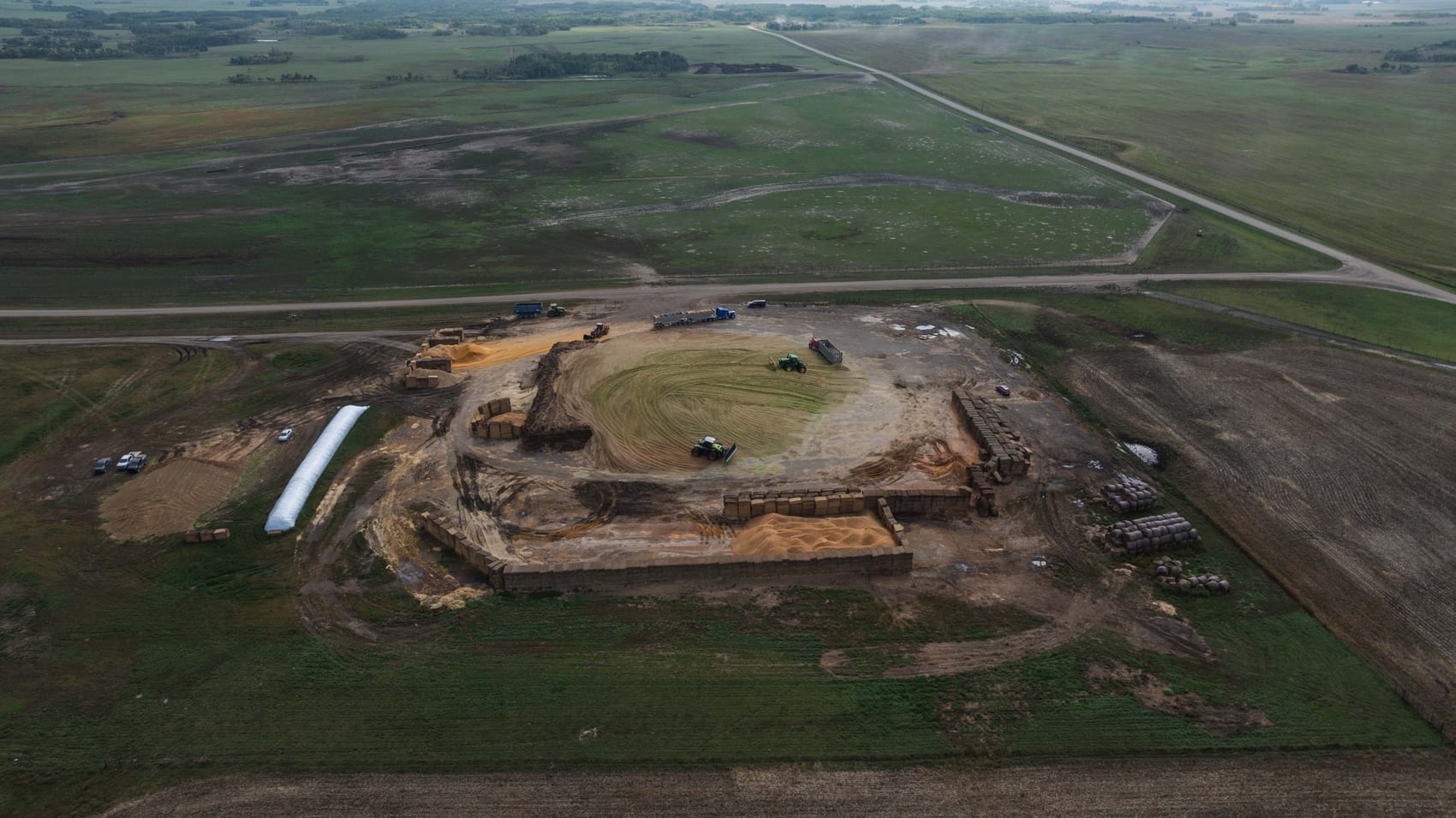
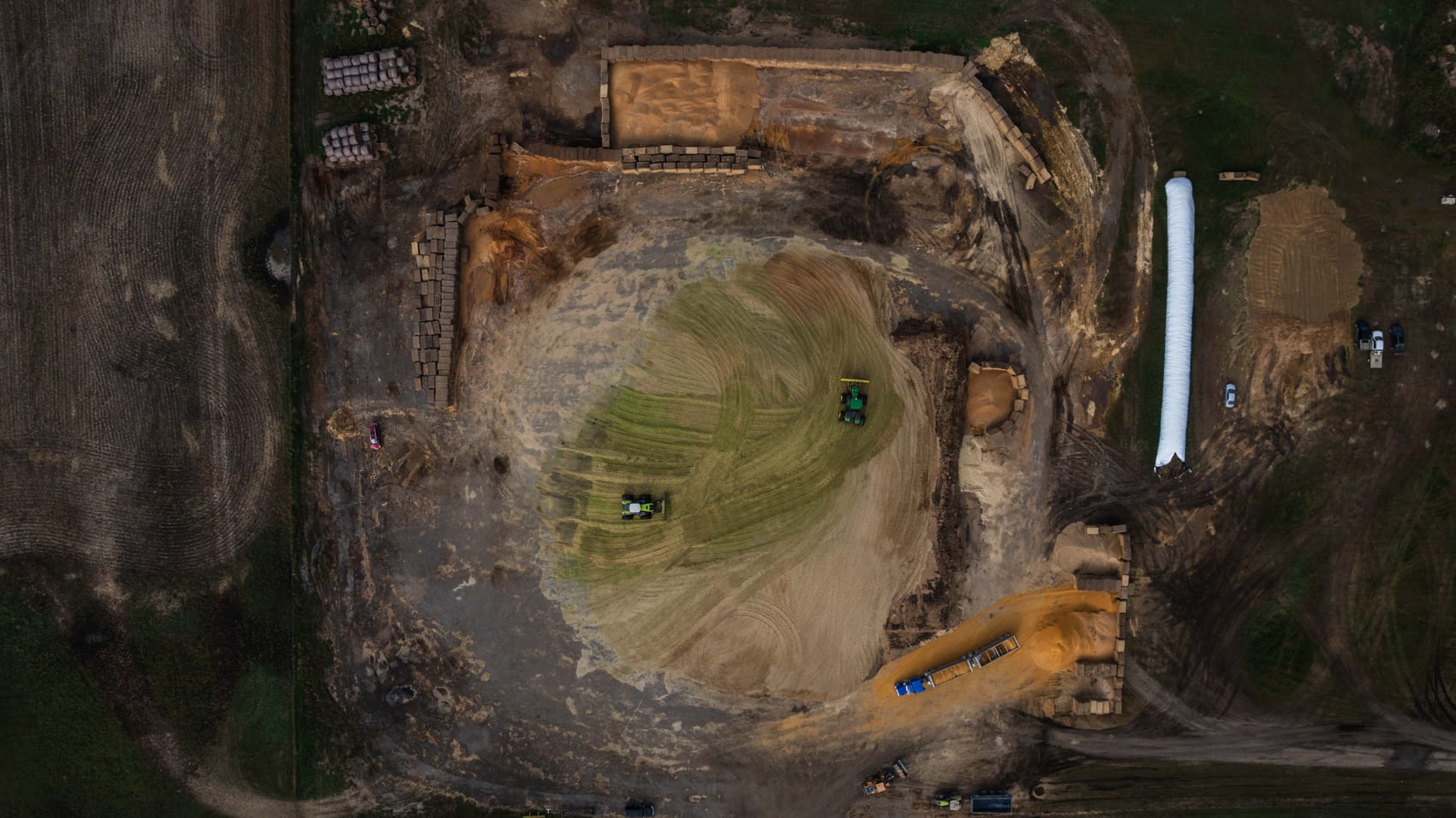
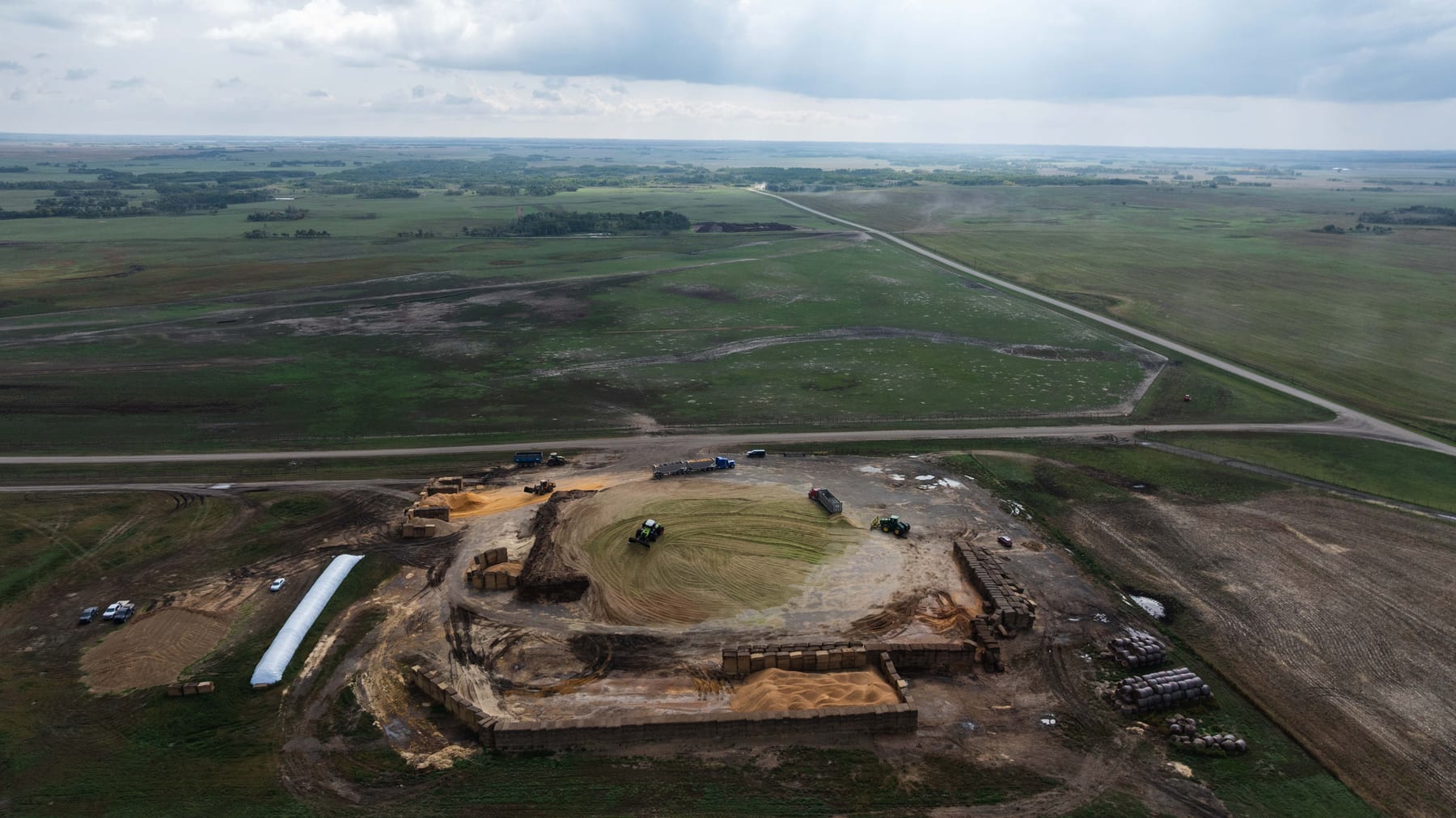
From the field to the pit, then to the bunk.
Silage comes in around mid-August. Even in a dry year the oat crop yields 8 to 12 ton per acre. Oats hold up better than barley through the heat, so we grow oats and corn in rotation and put it all up as silage.
- 2A new pit, closer to homeWe built a pit at the far south end of the ranch, cutting the haul from 10 to 12 km down to about 2 km. Less freight, less road traffic, less dust. That pit feeds the next year's backgrounding cattle in that part of the ranch.
- 88 to 12 ton per acreWhat the oat crop puts up even in a dry year. Oats take the heat better than barley, so the silage tonnage holds.
- RMixed and fed outA feed wagon mixes the ration and delivers a total mixed ration to the bunks. Through winter we lay down fresh straw bed packs so the cattle stay bedded and comfortable.
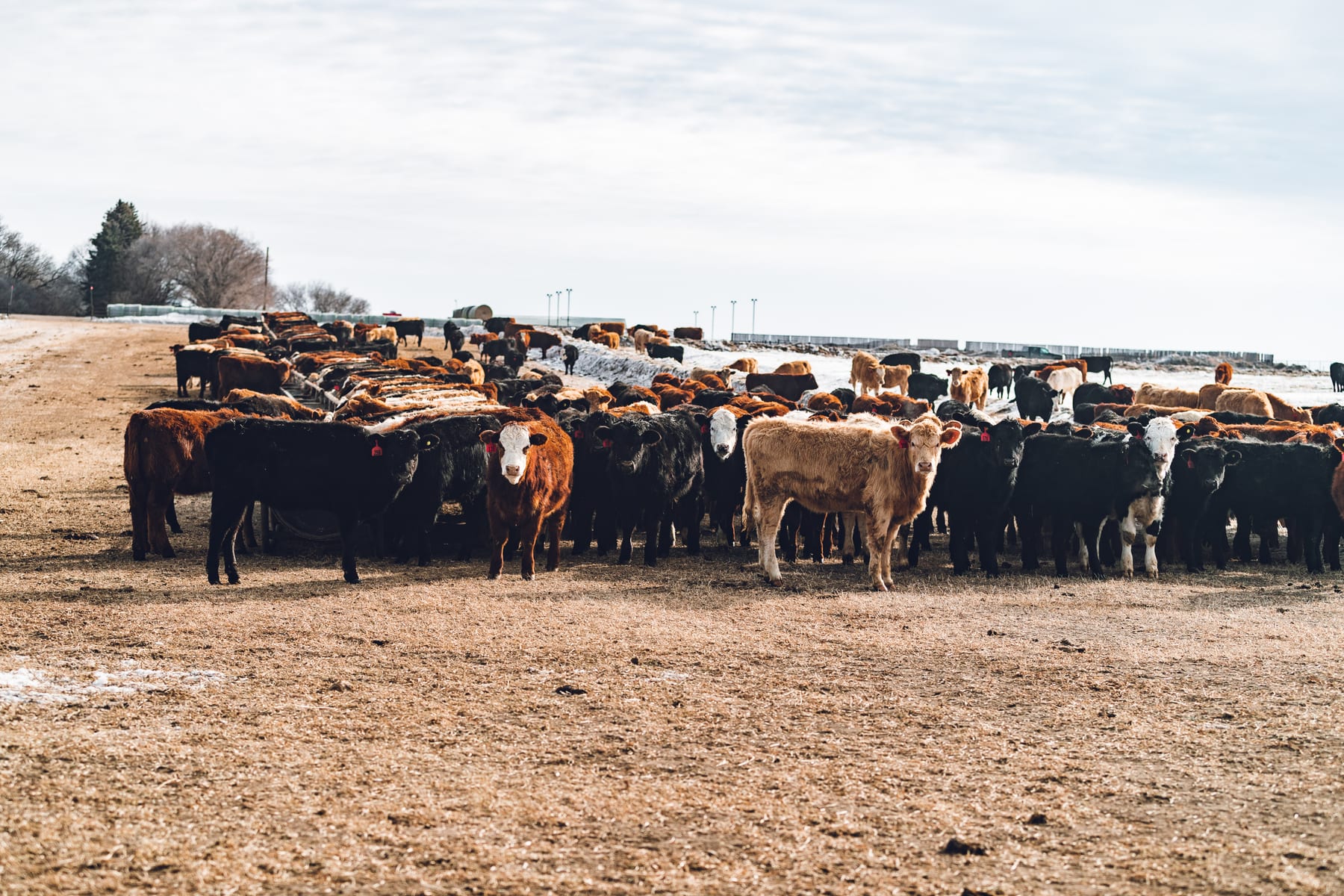
Fed on the move, never in a pen.
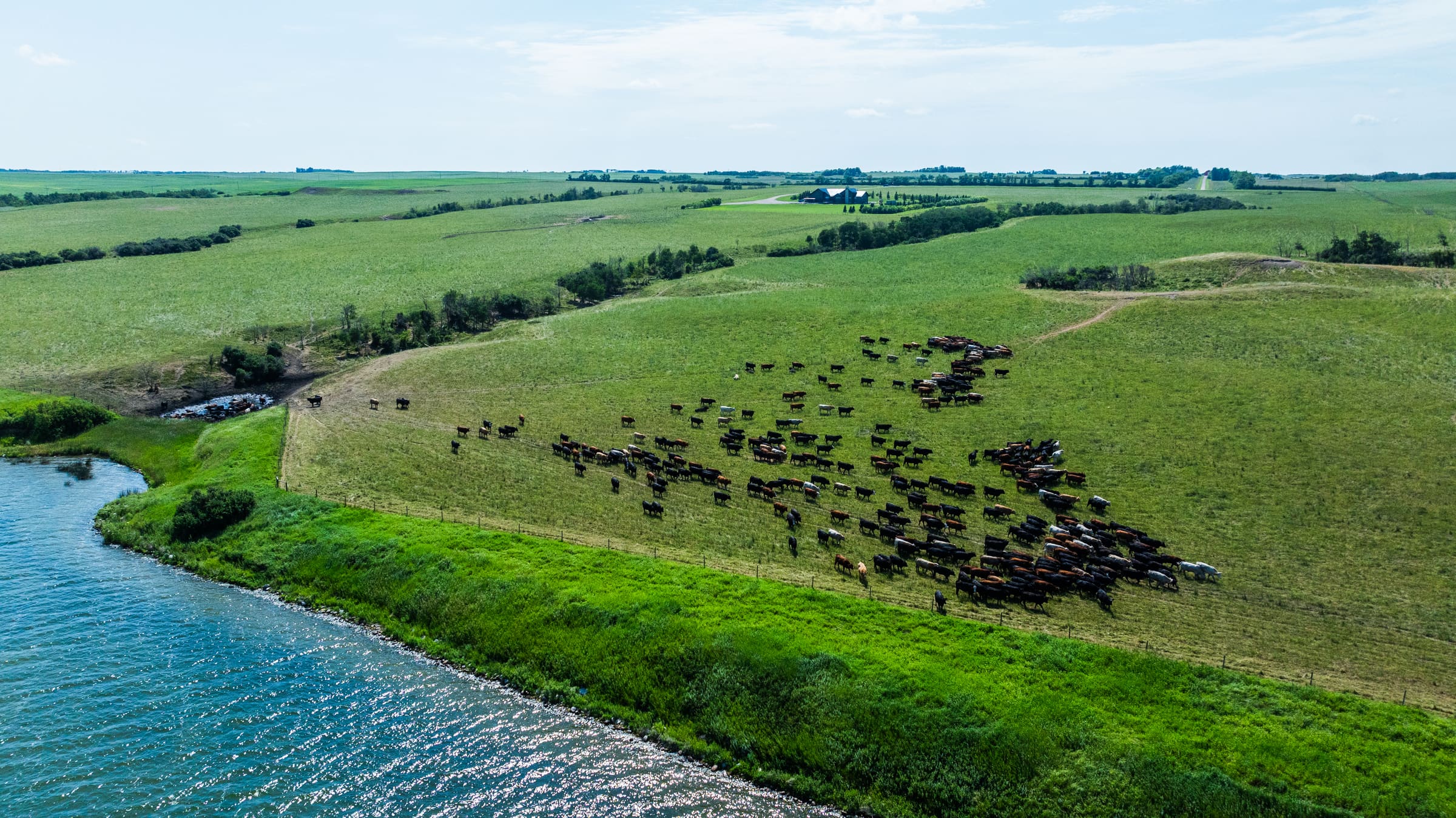
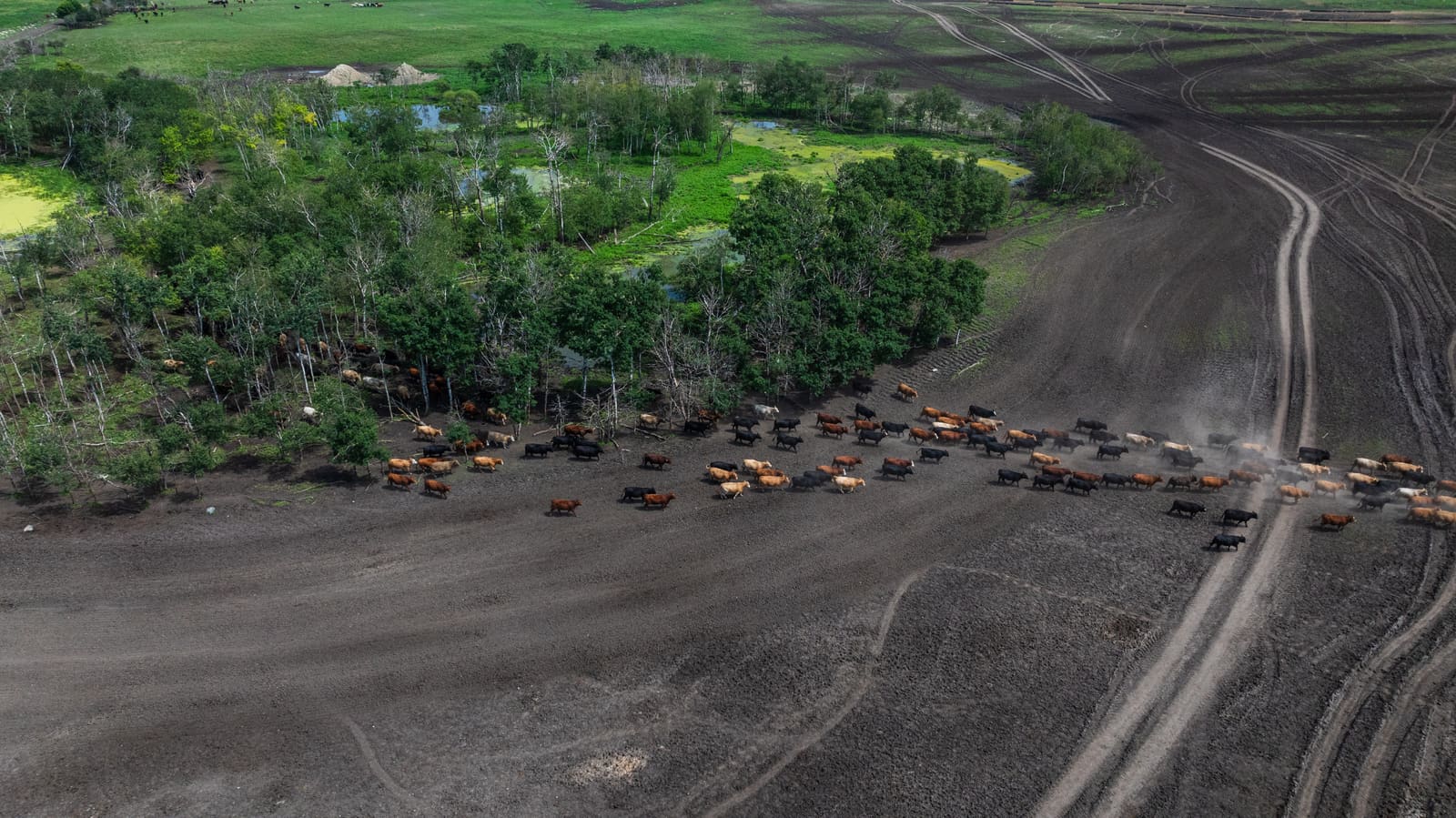
Cattle are fed in portable feed bunks out on grass, never crowded into a pen. We bring the feed to them across large 80-acre paddocks so they stay on clean ground.
It is more work to feed this way, but the cattle are calmer, healthier, and the pasture holds up.
A fresh quarter-section every two days.
We move our cattle onto a fresh quarter-section every two days, running them in groups of 500 to 1,000 head. Fresh feed keeps gains consistent and gives each piece of grass time to recover.
- 2Move every two daysEach group steps onto a fresh quarter-section so the cattle are always on new feed.
- 5Groups of 500 to 1,000Right-sized groups graze a paddock evenly without overworking it.
- GHealthier pastureRest between grazings keeps the grass strong and the ground productive.
- WPiped, filtered waterAbout 30 miles of underground pipeline keeps clean, filtered water in every paddock, metered so we know what the cattle drink.
- SSalt and mineral programA custom salt and mineral mix, garlic included, plus oilers in the paddocks to keep flies off the cattle.
Watch: from crop to feed bunk.
Silage off the field, a winter on the prairie, and the feed going out to the cattle. This is how the feed program actually runs.
Leave it better than we found it.
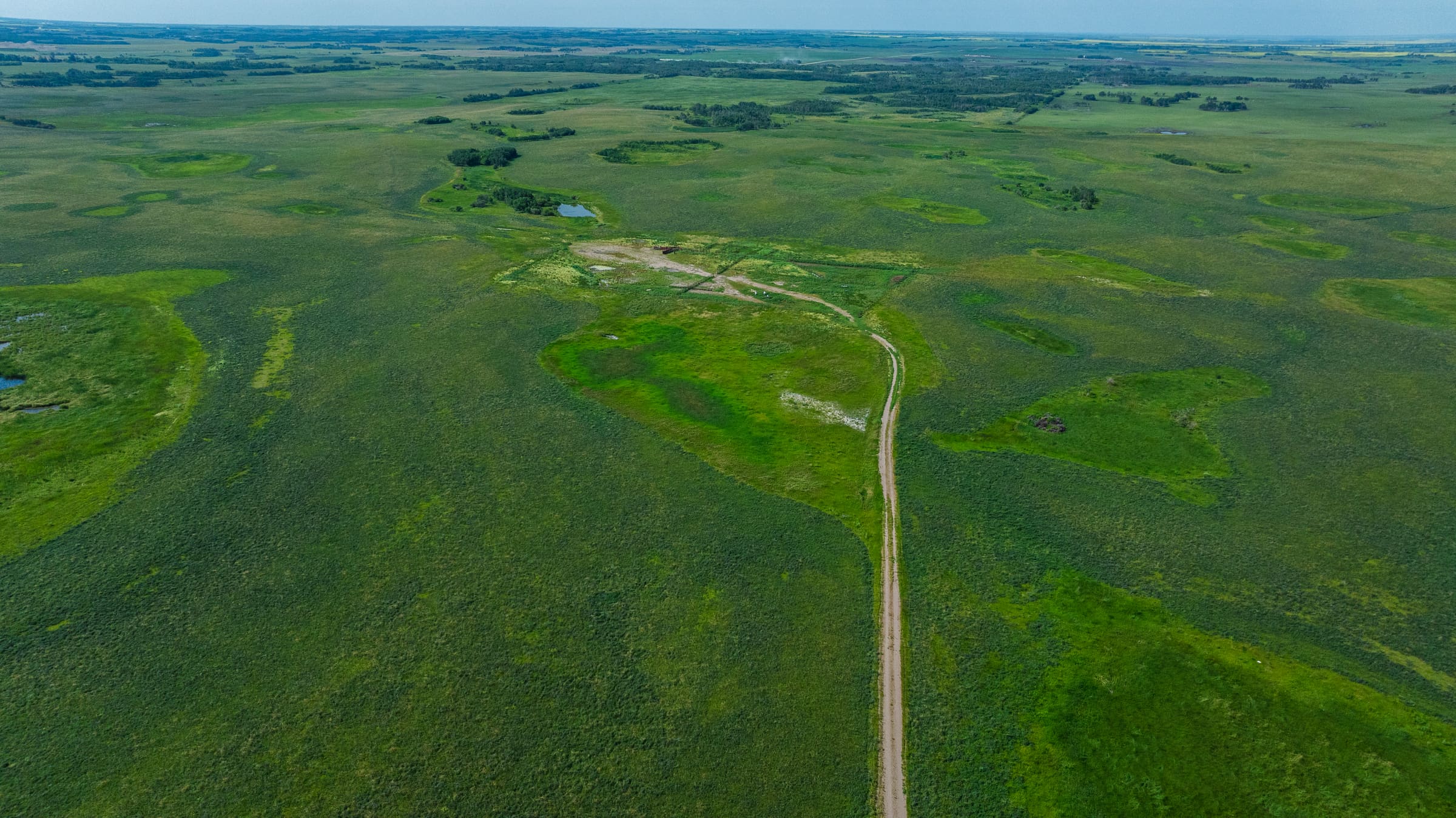
The land is not something we work around. It is the operation. We work it with care and aim to hand it to the next generation in better shape than we found it.
Grass stands here run about 15 years. When a stand slows down we break it, run oats and corn through it for about four years, and seed it back to grass, rotating the whole ranch through the cycle.
That mindset shows up in how we graze, how we farm our feed, and how we look after every acre we run.
Raised on prairie, fed on our own crop.
Want to know more about how we feed and graze? Send the ranch office a message and we will talk.