
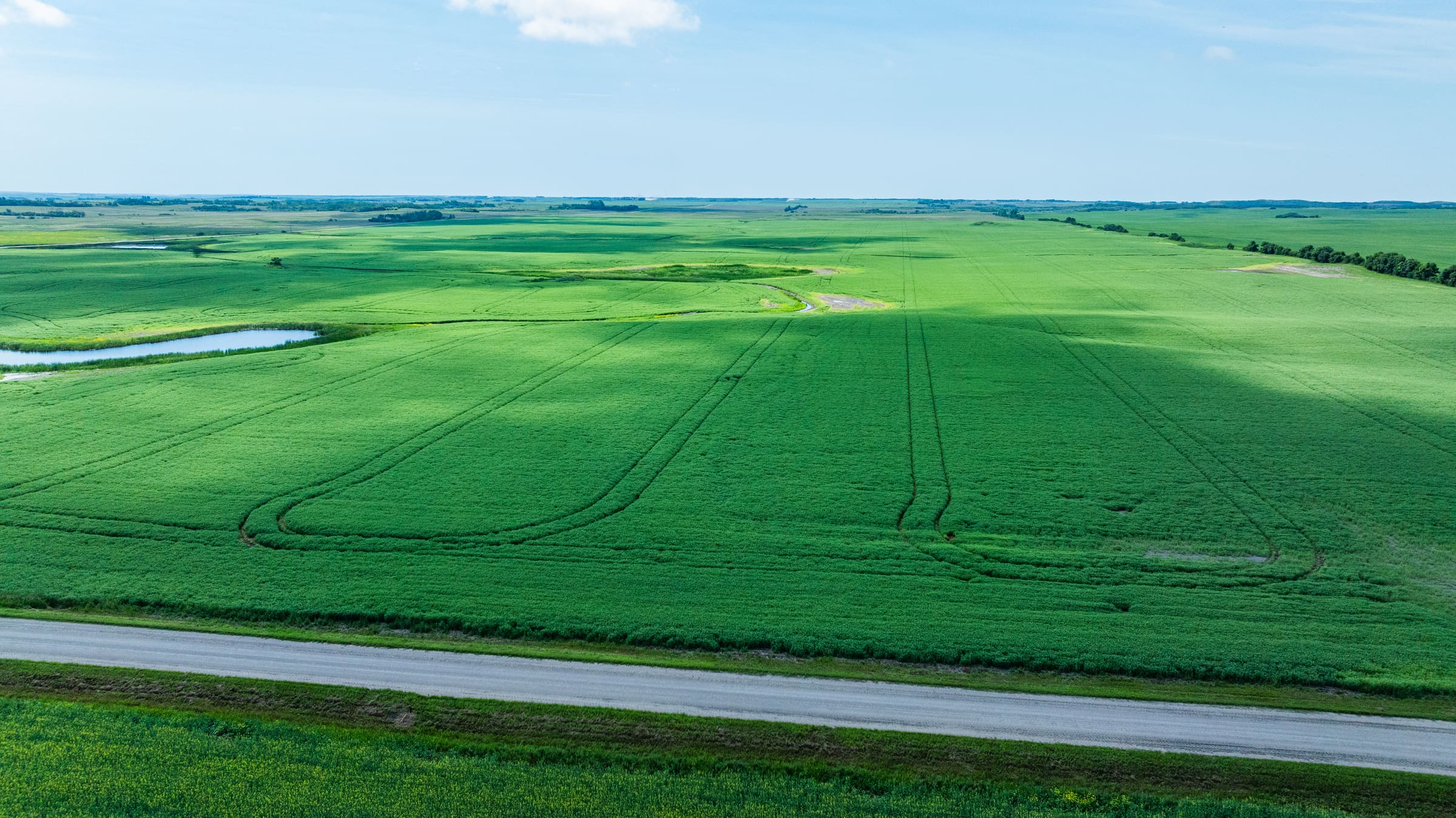
The whole year, out in the open.
Backgrounding runs year-round here. This page follows the cycle the way we would walk you through it on the ranch, season by season, from the day cattle arrive to the day they ship.
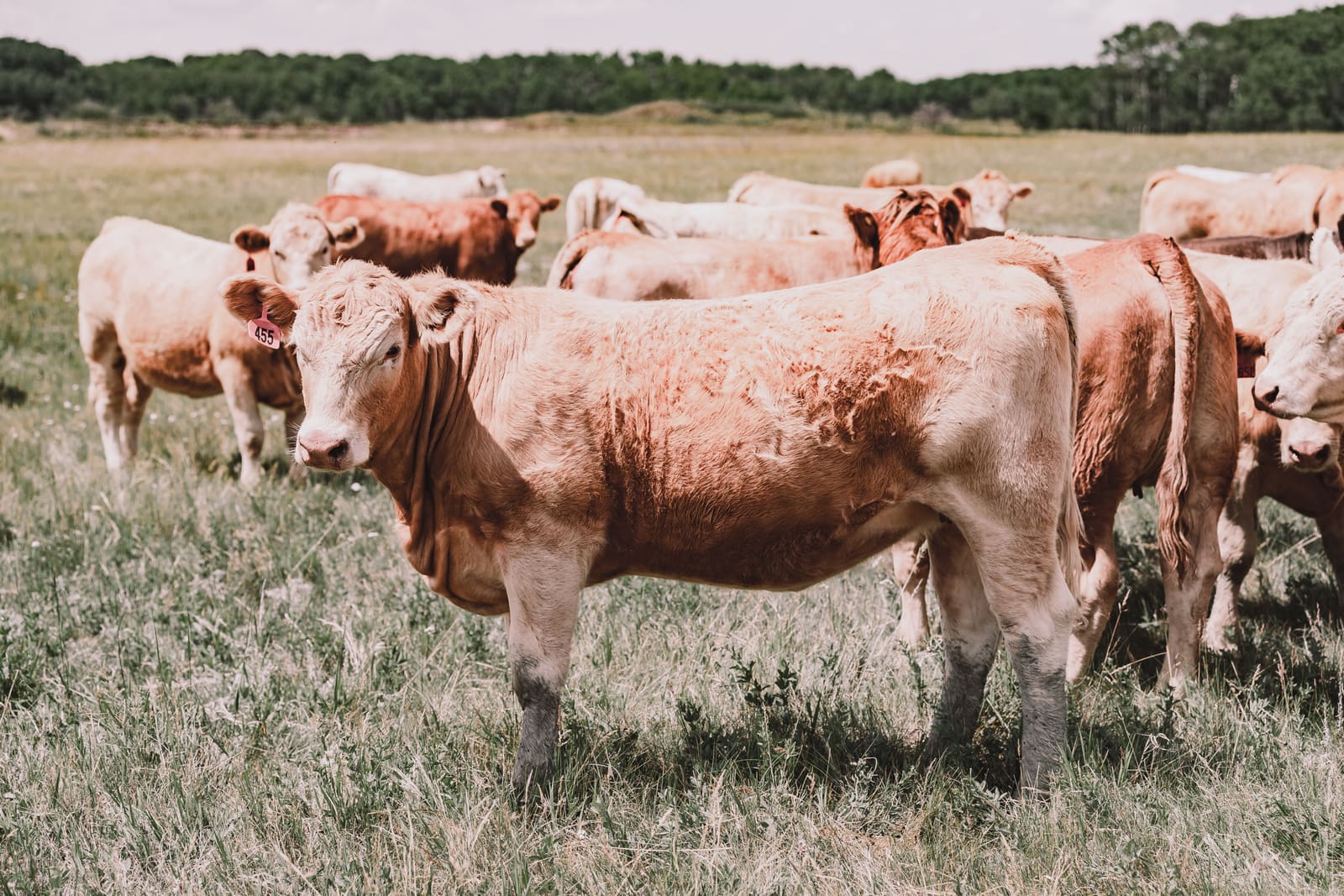
Sorted, then out to grass.
Before anything goes out, it is sorted by colour and weight into uniform groups. Uniform groups feed evenly, gain evenly, and ship as tight lots later in the year.
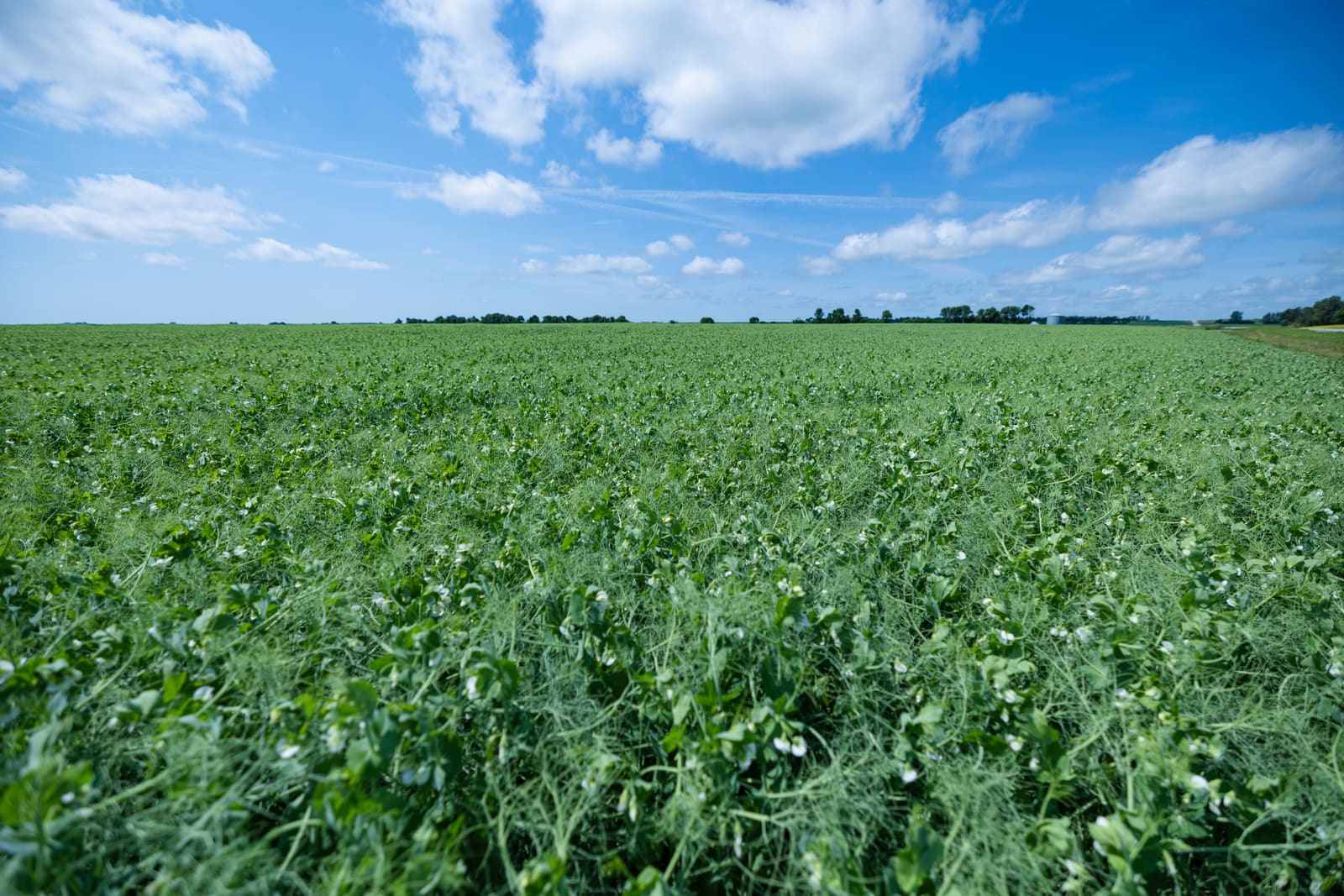
Across the feed acres the crops are in and establishing: oats and corn in rotation, all of it destined for the silage pits that will carry the herd through winter.
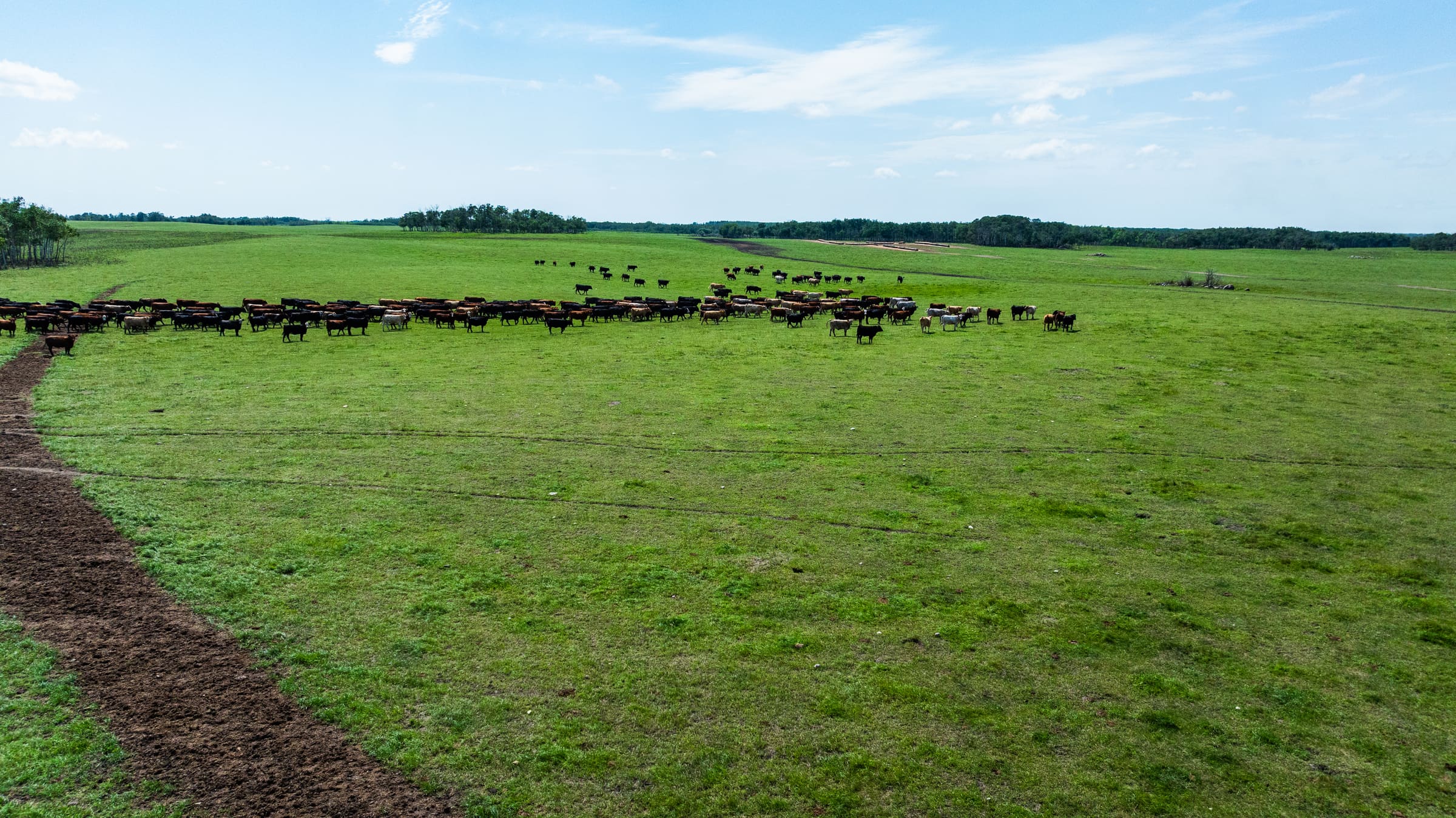
Grazing at full stride.
Cattle live out on grass in 80-acre paddocks, fed from portable bunks, never in a pen. On a quarter-section of grass we run about 1,500 head, spread out, moving, and calm.
- 2A fresh quarter every two daysGroups of 500 to 1,000 head step onto new grass so gains stay consistent and every paddock gets its rest.
- WPiped, filtered waterAbout 30 miles of underground pipeline keeps clean, filtered water in every paddock, metered so we know what the cattle drink.
- SSalt and mineral programA custom salt and mineral mix, garlic included, plus oilers in the paddocks to keep flies off the cattle.
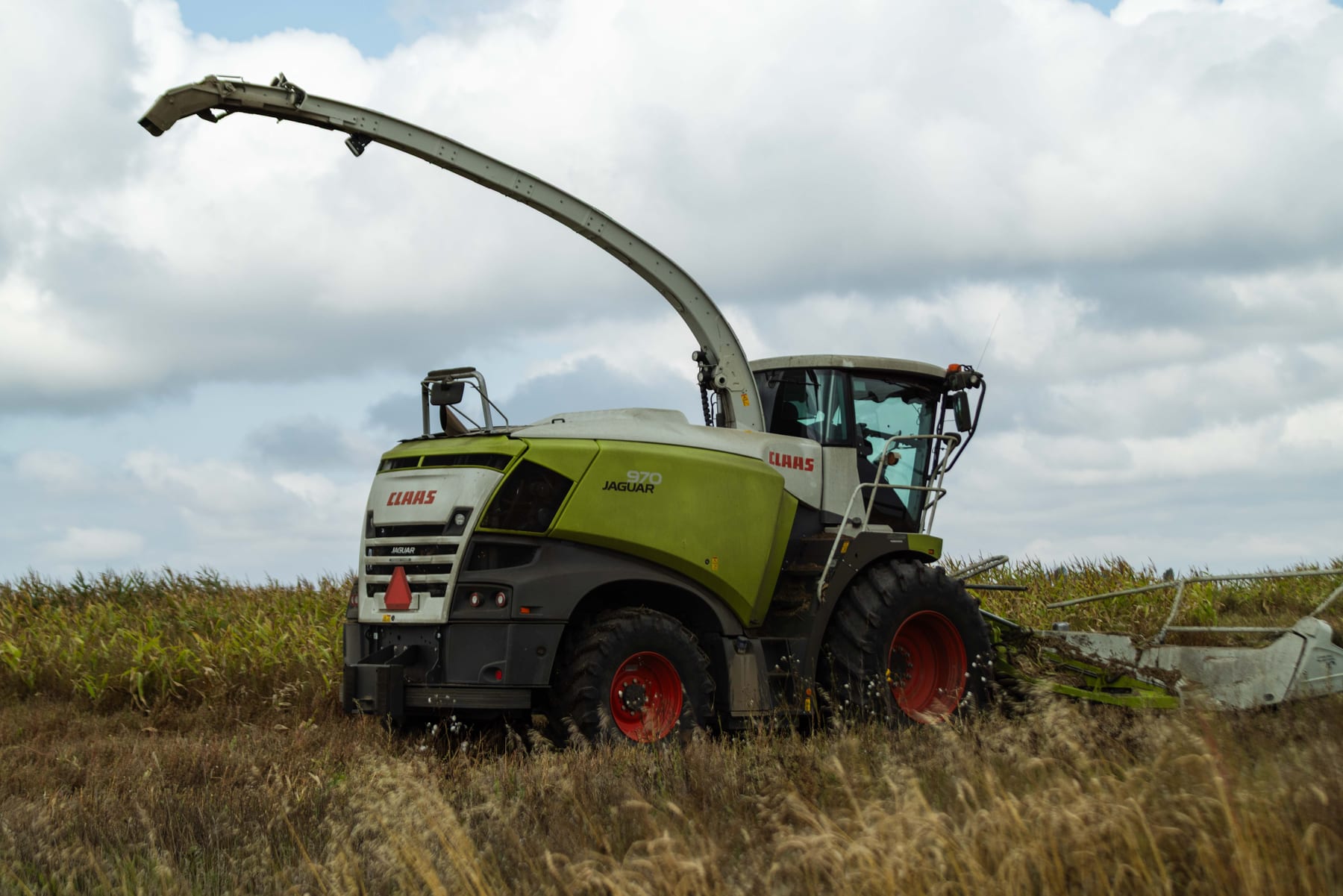
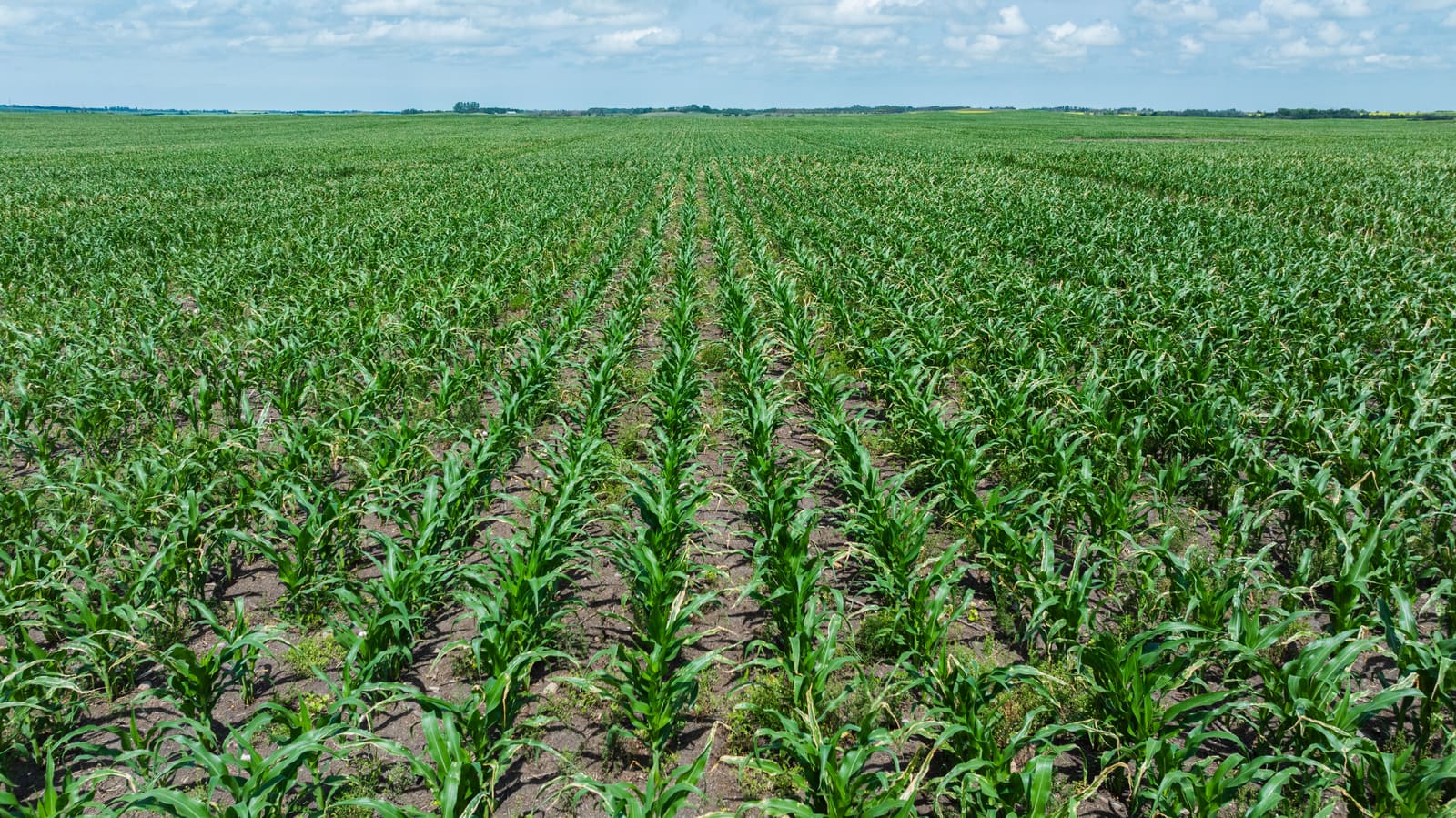
Silage comes in, winter is covered.
Oats come off first, putting up 8 to 12 ton per acre even in a dry year, with corn behind them. Everything is chopped, hauled, and packed into pits sited close to where the cattle will winter, so the feed is stored beside the mouths that will eat it.
Once a field is off, yearlings graze the low spots and fence lines clean, and the field is touched up and ready for next year's crop.
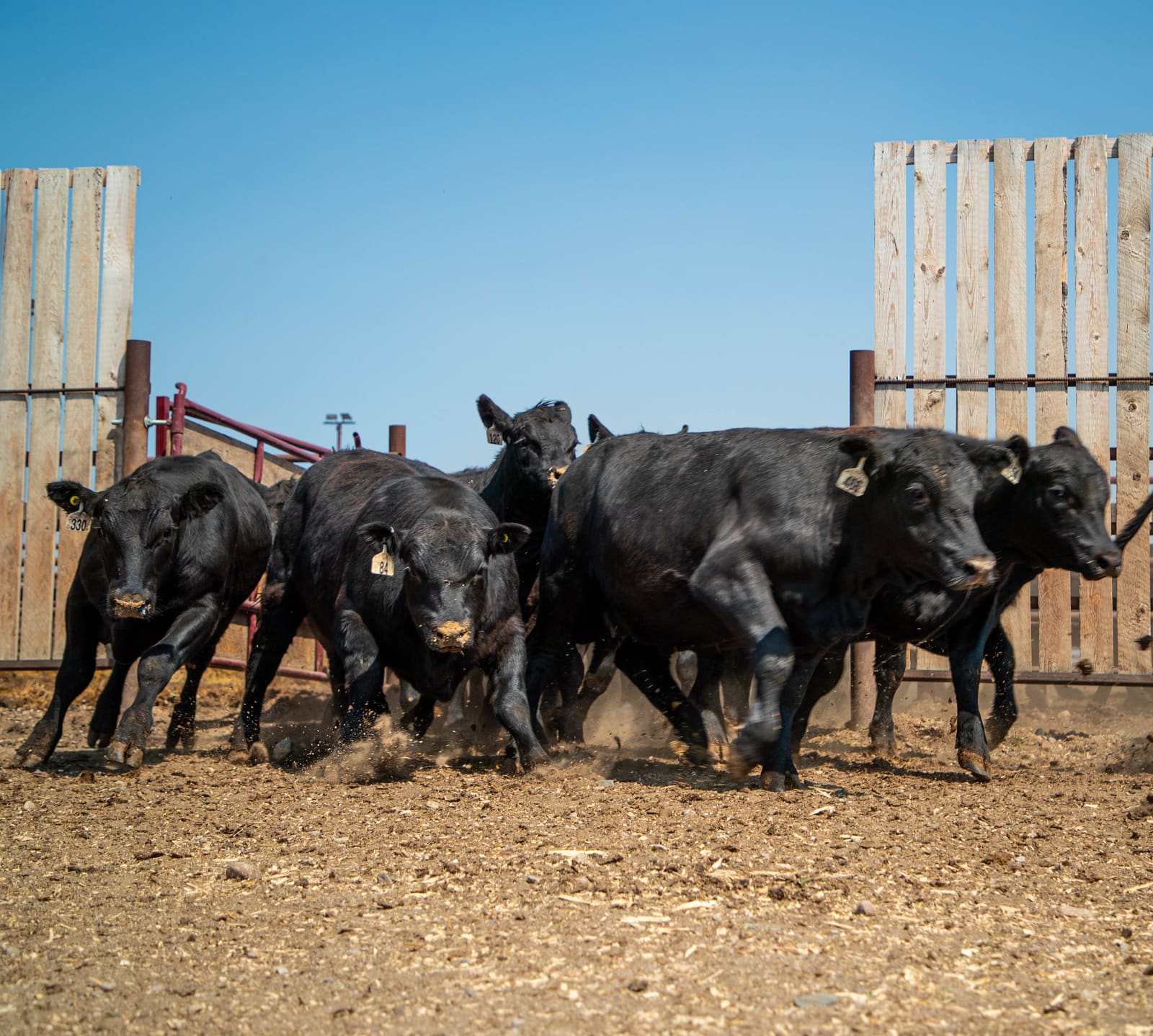
New cattle, first day on record.
Receiving season. Loads arrive, and every single animal starts its time here the same way: through the chute.
- 6In around 600 lbCattle arrive light and go straight onto the program, sorted by colour and weight into uniform groups.
- CEvery animal over the chuteEverything that comes onto the place comes in through the handling system: tagged, weighed, health-checked, recorded.
- PThe passport starts hereFrom day one the ear tag carries the animal's health record, its feed record, and the field it is in.
Fed and bedded through the cold.
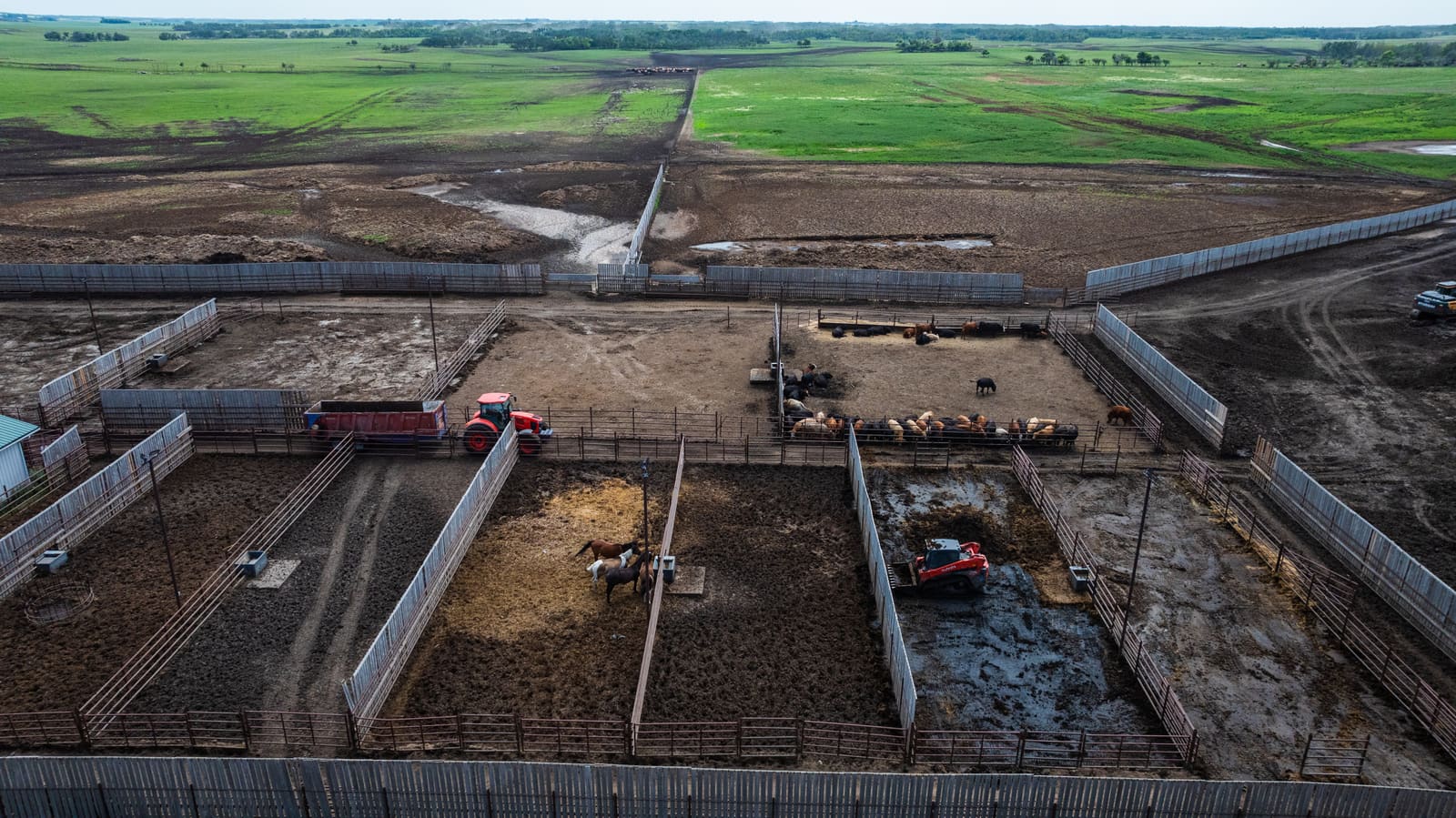
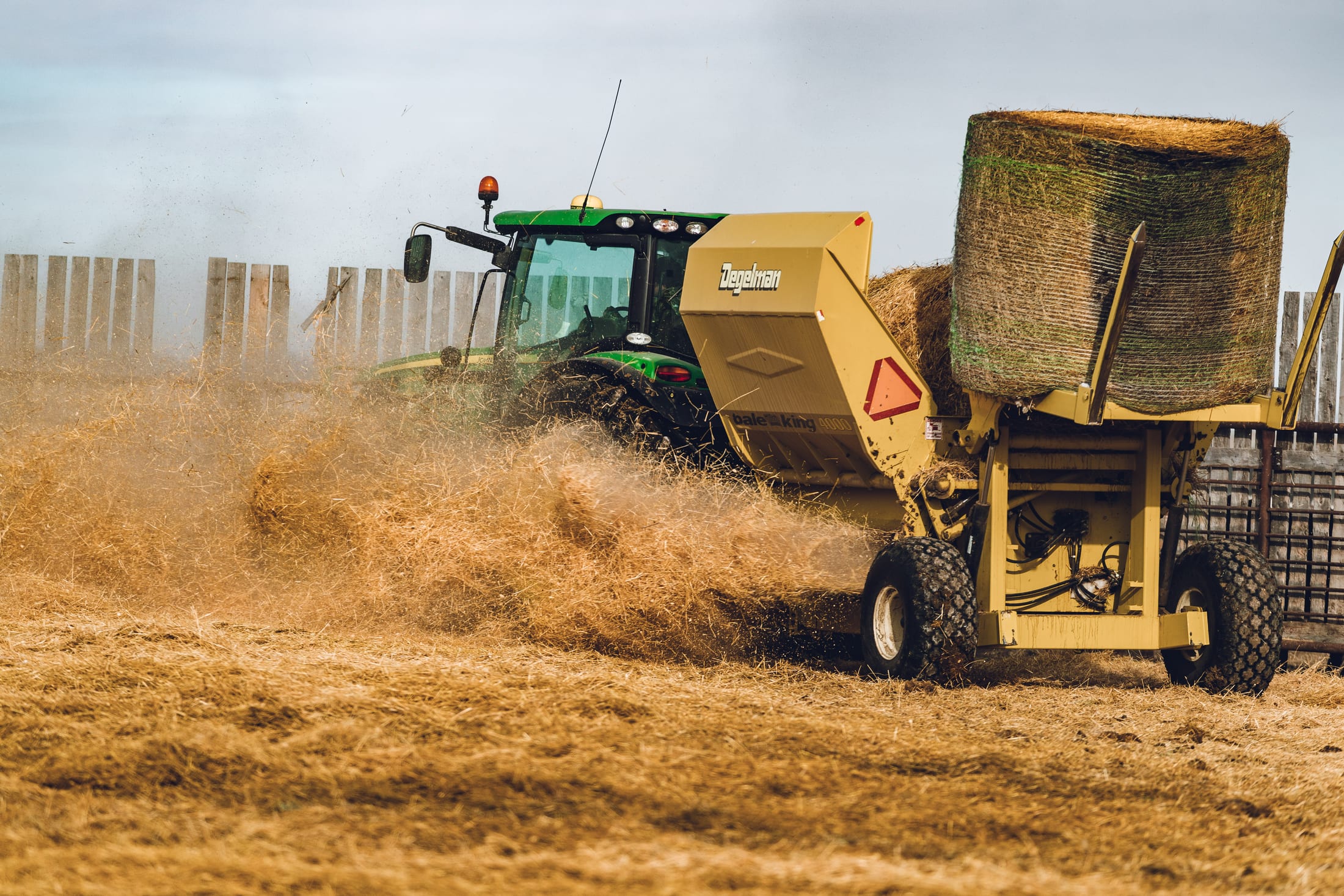
The feed wagon mixes a total mixed ration from the silage pits and delivers it to portable bunks out on the fields, every day, in any weather.
Fresh straw bed packs keep the cattle bedded and comfortable, and the crew checks every group daily through the coldest months.
Sold before 1,000 pounds, in uniform lots.
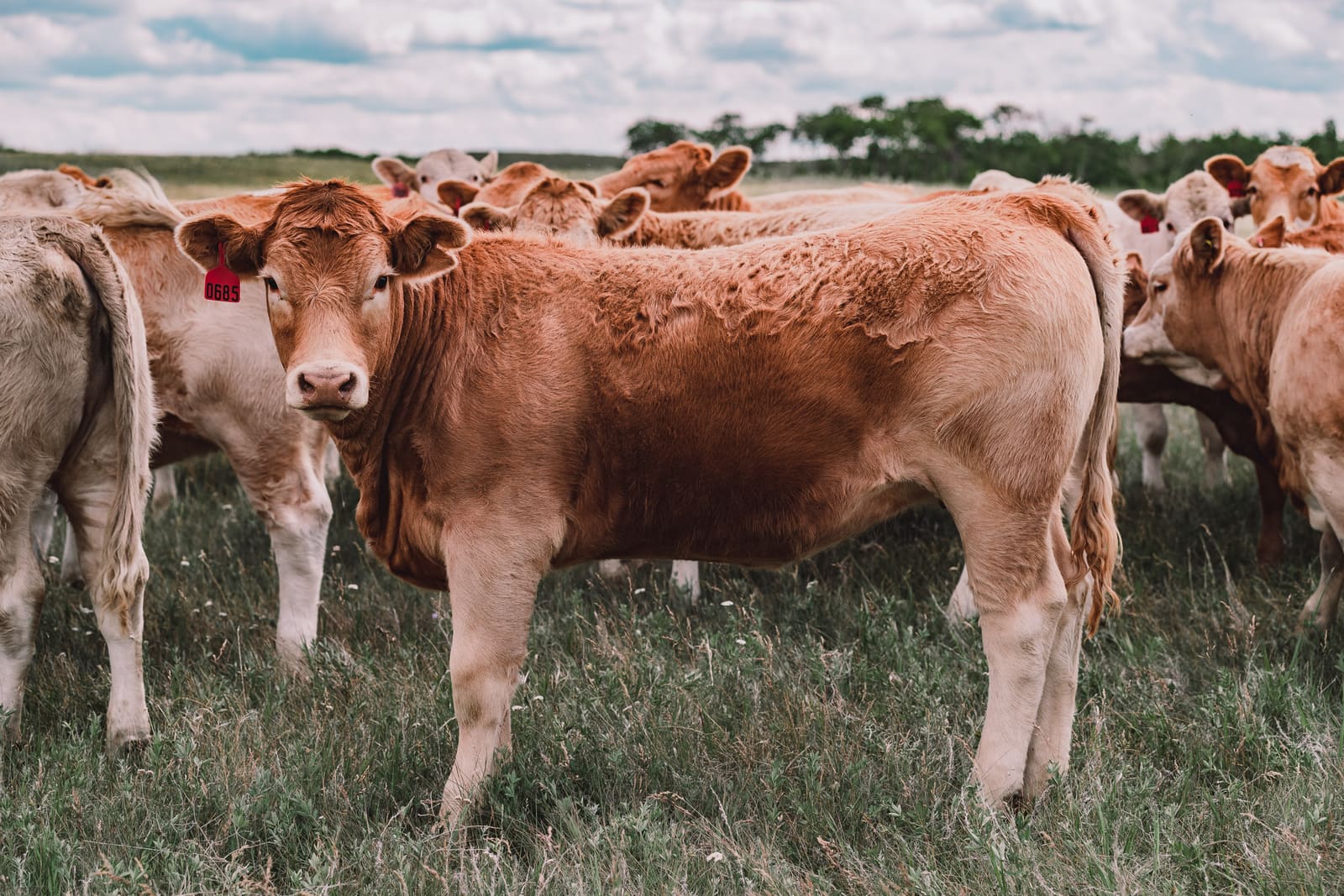
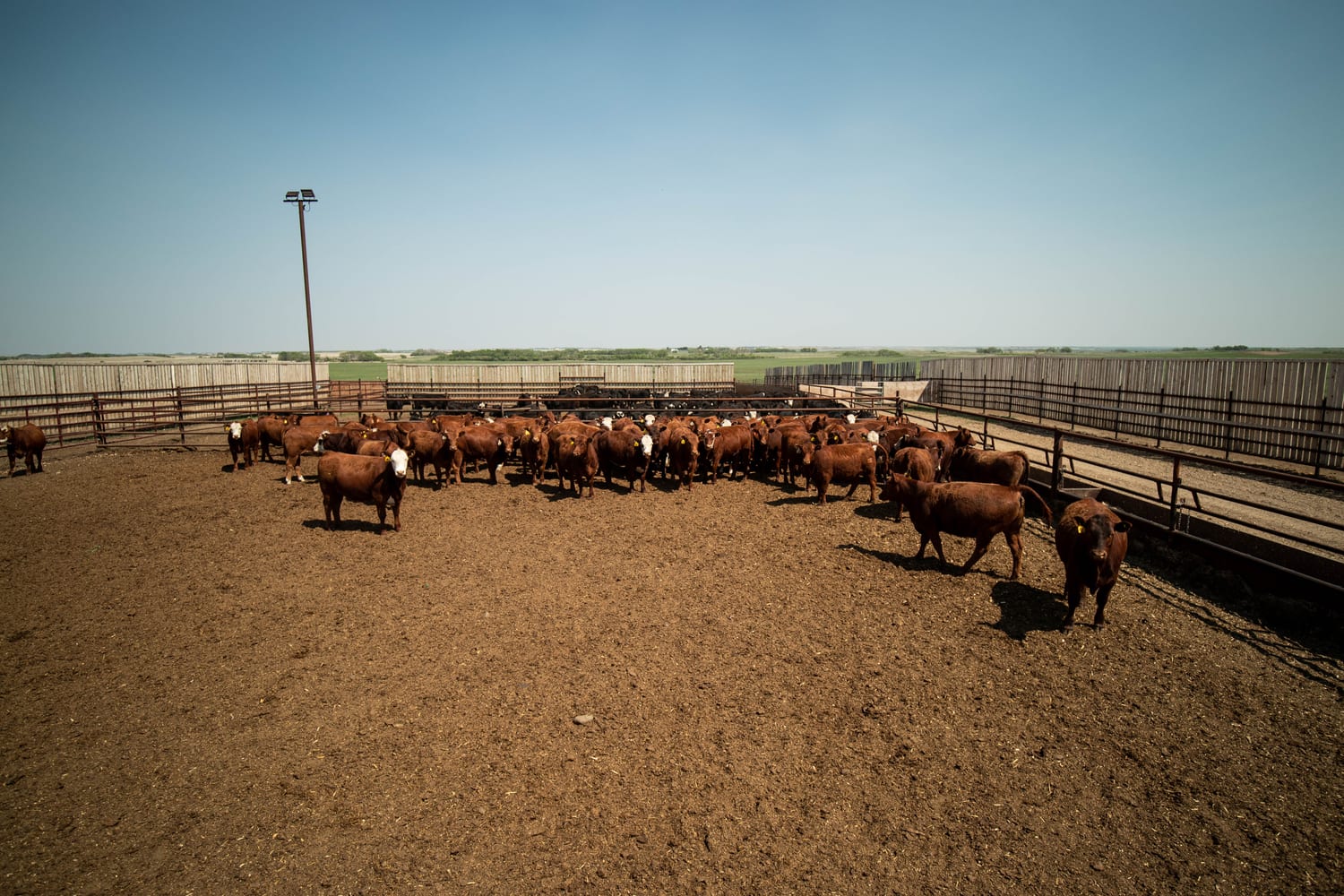
Cattle leave here before 1,000 pounds, in the same colour- and weight-sorted groups they were raised in. Because the cycle runs year-round, lots come ready through the year, not on one sale day.
They sell direct off the ranch and through Team Auction, and shipping runs the way the rest of the place does: 580 head loaded in two hours, calmly and on time.
The seasons, on film.
Start with the full ranch overview, then follow the seasons: the land from the air, grazing, silage, winter feeding, and shipping day. This is the cycle as it actually runs.
See what the year produces.
The cattle at the end of this cycle are the whole point. See the genetics and the guarantee behind them, or send the ranch office a message.